Tag: change management

CULTURE AUDIT: PART 2

Looking for Culture Clues: Onboarding

Photo by Jon Tyson on Unsplash

There are many areas in a workplace to look for cultural clues: meetings/gatherings, physical space design, team projects, hiring practices, client facing practices, and more. In my experience, one key area that indicates culture in any institution is the way people are onboarded. I have distinct memories of the first days at the schools I have worked in. Why is this? These onboarding times have an impact and create lasting impressions on a person’s experience. 

A poor onboarding experience can leave employees feeling uncomfortable, confused, and dejected.

A Guide to Onboarding for New Hires (For First-Time Managers)

According to Harvard Business Review, onboarding is defined as “the crucial process through which new employees acquire the knowledge, skills, and behaviors needed to integrate into an organization.”  Onboarding can have great impact on an employee’s overall experience and retention at a company. 

Culture Audit

How do we investigate the culture of our workplace?

Photo by Proxyclick Visitor Management System on Unsplash

How can you determine the culture of a community as a new member or as a senior member? How do you know how people are perceiving the culture of the community you are currently leading? These are questions that have been on my mind lately, especially as we enter the summer months, which are more poised for reflection.

There are often layers to community culture. There is the outward layer of culture that institutions often name in their mission statements on their websites. Then, there is the more hidden culture that is harder to understand and define. We mostly find this out after we have entered a community and have spent some time there. How do we find this out?

I have worked in many different institutions in my career. This has enabled me to observe and investigate culture in each place.

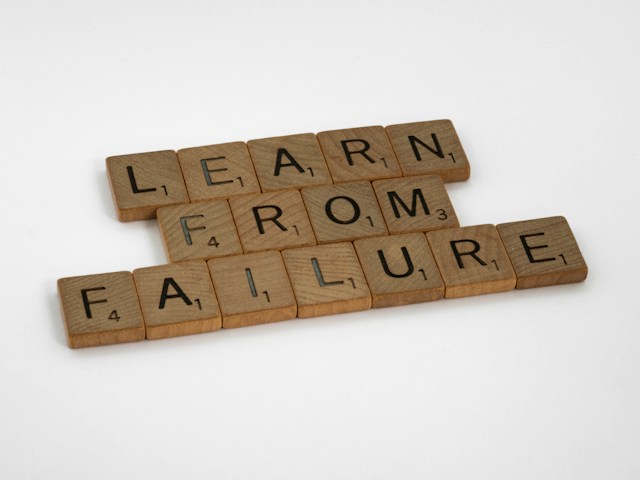
How are you making room for failure?

How do you make room for failure in your leadership practice?

Photo by Brett Jordan on Unsplash

How do you make room for failure in your leadership practice? When I was new to my career and leadership, I often painstakingly tried to avoid failure. I would spend enormous amounts of time thinking, planning, creating structures, and backup plans just in case something went wrong. When something inevitably went wrong, I blamed myself and tried to prepare even more! I soon realized that this process was not effective. I was not growing and learning about myself as a leader with this method. I needed to try something different.

Try not to control everything.

Try not to control everything, especially the things that are not in your control. I try to spend time thinking about what parts of each situation are actually within my control, not in my control or maybe within my field of influence.

Are You Getting in Your Own Way?

Are you standing on the hose and wondering why the water is not coming out?

Photo by Markus Winkler on Unsplash

How are you getting in your own way and maybe not even realizing it? My yoga teacher mentioned this image of standing on the hose and looking around wondering why the water isn’t coming out. This was a good visual for me. I often do this! I wonder what’s going wrong, who is making things go wrong, and I forget to take into consideration that I might be impacting the situation. I remind myself to pause and think about where I had impact in the situation. It’s not about blame necessarily. Rather, it is about noticing where I can create a different impact. Pausing and reflecting helps me realize where I can possibly change or do something different next time. I raise my awareness of my role and actions. After all, I can’t change what others do but I can manage my own choices.

Antoni Gaudi and Strategic Leadership

Antoni Gaudí, one of the most universal figures of Catalan culture and international architecture, devoted more than 40 years to the Temple of the Sagrada Família.”

Strategic work in phases is more effective and intentional. I have learned this lesson throughout my career, and more recently, when I visited La Sagrada Familia in Barcelona. We had the good fortune to see our daughter during her semester abroad in Barcelona, and of course, we visited the famous Antoni Gaudi Basilica, La Sagrada Familia

Ahead of his time, unique. A man of faith, observer of nature and genius architect, Antoni Gaudí has become a universal figure in modern architecture.

La Sagrada Familia

One of the plaques stated that Gaudi intentionally engineered his construction of the Basilisca to be done over many years in phases because he thought people would be less likely to give up on the project, and would be more invested for a longer time.

Where do I start goal setting? Deficits or Strengths?

Goal setting by focusing on your strengths can lead to success. Oftentimes we think about where we want to start setting goals; we tend to think about our weaknesses or where we feel deficient. What if we decided to include our strengths?

A strengths-based goal draws on your natural talents to make positive and lasting change in your life while challenging you to use your talents in new ways.

Gallup

I found that when I start from a place of weakness that it feels like a longer road and the strategy to get there feels unfamiliar. When I incorporate my strengths, the skills and qualities that I practice often and come naturally to me, the goal feels more reachable. 

For example, I find the marketing aspects of running a coaching business to be an area that I want to grow. I identify this as an area that I do not have a lot of practice and experience and where I need to increase my skills.

Sitting at the Water Hole

Photo by ActionVance on Unsplash

I sit at the water hole and let my thoughts come to me.

Sometimes, I feel like my thoughts are chasing me and they keep finding me. Gayathri Narayanan, my meditation teacher, encouraged us to ‘sit at the water hole’ and wait for our thoughts to come to us. She said that her teacher, Gil Fronsdal, talked about it in terms of being a wildlife photographer. You could either follow the footprints and chase the wildlife around their territory or you could simply sit at the water hole knowing all animals will eventually need to drink. The first helpful step for me is to stop chasing my thoughts and stop letting them chase me. I sit at the water hole and let them come to me.

As my thoughts come to me, I label them. Is it useful? Is it pleasant? Unpleasant? Neutral? These questions have been helpful to me as I navigate times in my life that consume my thoughts.

Understanding the Shadow Side of Your Strengths

Do you know the shadow side of your strengths?

Photo by Martino Pietropoli on Unsplash

One of the most intriguing parts of learning about my strengths was also learning about the blind spots or as I like to think of them: the shadow side. As I read about the blind spots in my strengths report, I felt as though my husband and children wrote the statements because they are the people who know me best. The statements spoke the truth and were such keen observations. For example, discipline is one of my top ten strengths. I bring order to processes and see the details, I am prepared, and the shadow side or the barrier is that I tend to be rigid. My family knows my shadow side very well!

Paying attention to your strengths is important. Reflecting on what happens when we lean too far into those strengths without reflection is vital.

Reflect and Reset

Pause. Breathe. Resume. Reflecting can lead to resetting.

Photo by Brett Jordan on Unsplash

Take the time to pause, breathe, and look ahead. It can be a valuable process. When we take the time to look back, we can also take the time to look forward more effectively. Looking back helps us make sense of what happened and looking forward helps us use this information to grow. As the seasons change, the days get longer, and the school year comes to a close, this can be a time ripe for reflection. 

Reflection is a powerful tool, especially when paired with looking ahead. Before you close the doors in your mind on the past, it’s valuable to remember, process what happened, ask questions, and seek other perspectives. 

Look back and look ahead…

  • Process what happened:
    • Decide how you process best: writing, talking, listening, a stillness practice (meditation, breath work), or some combination of these.

The Power of Reflection

Reflection is a powerful tool.

Photo by Priscilla Du Preez ???????? on Unsplash

Reflection is a powerful tool. It is the bridge between practice and growth and can lead to transformational change. Most of us live through our days barely stopping to think. I have discovered that I can practice endlessly at my craft to improve. Practice alone does not lead to transformative growth. Reflection serves as the bridge between practice and growth, not transactional growth but transformative growth.

Throughout my 30s and 40s, I functioned much like a robot going through the motions of work, taking care of kids, and then doing it all over the same watch day. Sometimes, I would not even remember the drive to work or home. I just knew I got there safely. 

I worked hard and practiced my craft daily but was going through the motions. I grew as an educator and became better at my job.