Tag: change management

Enabling Or Supporting?

Photo by Sierra Koder on Unsplash

Enabling holds people down, and supporting lifts people.

Enabling holds people down, and supporting lifts people. When we lean into enabling rather than supporting as parents, there is no path to independence. When we lean into supporting instead of enabling, we are creating a path to independence. The teacher of my parent coaching course made a clear distinction between enabling and supporting. She defined enabling as doing things for others with no plan for their future independence. Supporting is helping someone with a plan to help them build a specific skill towards independence. 


Enabling is the shadow side of being supportive. If we just repeatedly do things for others with no long-term plan for them to learn or do for themselves, then we are enabling. Supporting is showing, helping, guiding folks towards developing a skill, and eventually doing this skill independently. Supporting is at the core of being a coach.


Poetry and Plumbing

Photo by kevin laminto on Unsplash

Essential Elements of an Effective Leader: The Vision and the Execution

Effective leadership requires both poetry and plumbing. According to The Hidden Brain Podcast with host Shankar Vedantan, who speaks to Stanford University’s Huggy Rao about leadership, to discuss how leadership needs both ‘poetry’ and ‘plumbing’ to be successful. Rao states that the poetry in leadership is the vision, and the plumbing is essentially the execution that brings the vision to life.

The Balance: Vision and Execution

In my leadership journey, I have learned that these two elements, poetry and plumbing, vision and execution, must be joined together to be led effectively. In the episode, Rao and Vedantam discuss the infamous Fyre Festival as an example of failed leadership. It was a highly publicized, visionary event that completely collapsed into disaster due to a lack of execution and attention to detail. There was plenty of poetry and vision and a sheer lack of plumbing and execution.

Equanimity and Empathy: A Powerful Pairing

A lotus flower sitting above the mud below.

Photo by Alfonso Betancourt on Unsplash

As a leader and a parent, staying steady in the face of chaos, while also understanding how others feel, is a superpower that I strive to cultivate. This is practicing the powerful pairing of equanimity and empathy. It’s about bringing a steady and stable presence even when the world around you is swirling, while trying to understand what others are going through. Sometimes I am more successful than others.

Equanimity

Equanimity is characterized by the ability to remain calm, composed, open, and non-reactive in the face of challenging or distressing situations.

Positive Psychology

This image of the lotus flower helps me think of equanimity. The lotus flower sits in glorious beauty and yet underneath is mud and roots. It needs all those things to exist. It looks steady and calm above the muddy and murky waters.

Equanimity is not about ignoring the chaos.

Are You Rested?

How do you rest?

Photo by Dan Burton on Unsplash

When was the last time you felt rested? What do you do in your daily and weekly life that feels like rest? 

Rest and busyness:

We can’t talk about rest without discussing busyness. Why do we wear busyness proudly like a badge?People seem to love saying how busy they are. Do we say it to make us feel important or valuable? Does busyness show our level of success? Is it some sort of status symbol to look and sound busy? If so, then how do we find the rest that we need and desire? How do we begin to value rest?

What is rest?

Claudia Hammond, author of The Art of Rest, How to Find Respite in the Modern Age,  defines rest as wakeful rest: an activity that leaves you feeling restored and revitalized.. Rest is not sleep but rather a wakeful activity.

Are You Postponing Joy?

How are you getting in the way of feeling joy?

Photo by Rhendi Rukmana on Unsplash

Are you postponing joy? I had not thought of this concept until a recent group meditation session with my meditation teacher, Gayathri Narayanan. Gayathri introduced me to the idea that I could be postponing joy. I could be putting obstacles or barriers between myself and joyful moments.  So, if I am putting those barriers in, I could also remove them to create less distance between joy and myself. 

Thoughts as Barriers to Joy

I reflected on how I might be delaying joy in my own life. I recently found out I am likely moving again in a year’s time. Of course, I instantly started having thoughts: planning logistics, wondering, worrying. These thoughts led to sleepless nights and bad dreams. This is just what my mind does when I know change is afoot. It’s my routine.

Culture Audit Part 2.5 Off-Boarding Matters

How you say goodbye matters!

Photo by Mahdi Mahmoodi on Unsplash

Off- Boarding matters! Saying goodbye to colleagues is an indicator of culture. How do you say goodbye to people in your company, whether they are retiring, resigning, or asked to leave/fired? I have transitioned from a few schools in my career. Some of the schools have had long-held systems and traditions in place for saying goodbye: community gatherings, speeches, gifts, and more. Some places do not, especially when you have been asked to leave. Whether it is your choice or the company’s choice, I think it is important for a person to be able to leave with grace and a sense of closure.

Human Resources or People Operations can play a key role as well as the direct supervisor of the person. Think about how you want people to feel when they are leaving your company. What do you want them to say about their experiences?

CULTURE AUDIT: PART 2

Looking for Culture Clues: Onboarding

Photo by Jon Tyson on Unsplash

There are many areas in a workplace to look for cultural clues: meetings/gatherings, physical space design, team projects, hiring practices, client facing practices, and more. In my experience, one key area that indicates culture in any institution is the way people are onboarded. I have distinct memories of the first days at the schools I have worked in. Why is this? These onboarding times have an impact and create lasting impressions on a person’s experience. 

A poor onboarding experience can leave employees feeling uncomfortable, confused, and dejected.

A Guide to Onboarding for New Hires (For First-Time Managers)

According to Harvard Business Review, onboarding is defined as “the crucial process through which new employees acquire the knowledge, skills, and behaviors needed to integrate into an organization.”  Onboarding can have great impact on an employee’s overall experience and retention at a company. 

Culture Audit

How do we investigate the culture of our workplace?

Photo by Proxyclick Visitor Management System on Unsplash

How can you determine the culture of a community as a new member or as a senior member? How do you know how people are perceiving the culture of the community you are currently leading? These are questions that have been on my mind lately, especially as we enter the summer months, which are more poised for reflection.

There are often layers to community culture. There is the outward layer of culture that institutions often name in their mission statements on their websites. Then, there is the more hidden culture that is harder to understand and define. We mostly find this out after we have entered a community and have spent some time there. How do we find this out?

I have worked in many different institutions in my career. This has enabled me to observe and investigate culture in each place.

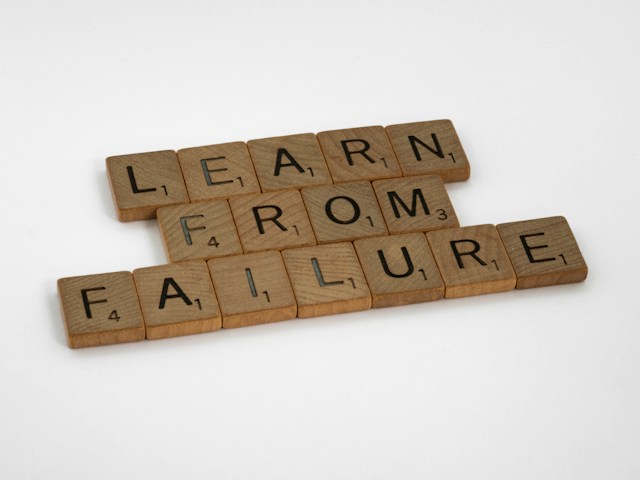
How are you making room for failure?

How do you make room for failure in your leadership practice?

Photo by Brett Jordan on Unsplash

How do you make room for failure in your leadership practice? When I was new to my career and leadership, I often painstakingly tried to avoid failure. I would spend enormous amounts of time thinking, planning, creating structures, and backup plans just in case something went wrong. When something inevitably went wrong, I blamed myself and tried to prepare even more! I soon realized that this process was not effective. I was not growing and learning about myself as a leader with this method. I needed to try something different.

Try not to control everything.

Try not to control everything, especially the things that are not in your control. I try to spend time thinking about what parts of each situation are actually within my control, not in my control or maybe within my field of influence.

Are You Getting in Your Own Way?

Are you standing on the hose and wondering why the water is not coming out?

Photo by Markus Winkler on Unsplash

How are you getting in your own way and maybe not even realizing it? My yoga teacher mentioned this image of standing on the hose and looking around wondering why the water isn’t coming out. This was a good visual for me. I often do this! I wonder what’s going wrong, who is making things go wrong, and I forget to take into consideration that I might be impacting the situation. I remind myself to pause and think about where I had impact in the situation. It’s not about blame necessarily. Rather, it is about noticing where I can create a different impact. Pausing and reflecting helps me realize where I can possibly change or do something different next time. I raise my awareness of my role and actions. After all, I can’t change what others do but I can manage my own choices.