Tag: mindset

Stillness Leads to Opportunities

I see choices and possibilities when I slow down.

Photo by Priscilla Du Preez ???????? on Unsplash

I have learned that there is a strong connection between having a stillness practice and the ability to see opportunities and choices before me. When I was new to leadership and to parenting, I felt that I had to have all the answers and fix all the problems. I was always on the move, putting out fires at work and at home. I only stopped when I slept. I would fall into a deep sleep each night as my head hit the pillow and awake each morning to my alarm as thinking I just went to bed. Those of you of a certain age may remember the phrase for the Dunkin’ Donut commercials that the weary donut baker said each dark morning as he started baking day after day: “It’s time to make the donuts.”


Are You Rested?

How do you rest?

Photo by Dan Burton on Unsplash

When was the last time you felt rested? What do you do in your daily and weekly life that feels like rest? 

Rest and busyness:

We can’t talk about rest without discussing busyness. Why do we wear busyness proudly like a badge?People seem to love saying how busy they are. Do we say it to make us feel important or valuable? Does busyness show our level of success? Is it some sort of status symbol to look and sound busy? If so, then how do we find the rest that we need and desire? How do we begin to value rest?

What is rest?

Claudia Hammond, author of The Art of Rest, How to Find Respite in the Modern Age,  defines rest as wakeful rest: an activity that leaves you feeling restored and revitalized.. Rest is not sleep but rather a wakeful activity.

Are You Postponing Joy?

How are you getting in the way of feeling joy?

Photo by Rhendi Rukmana on Unsplash

Are you postponing joy? I had not thought of this concept until a recent group meditation session with my meditation teacher, Gayathri Narayanan. Gayathri introduced me to the idea that I could be postponing joy. I could be putting obstacles or barriers between myself and joyful moments.  So, if I am putting those barriers in, I could also remove them to create less distance between joy and myself. 

Thoughts as Barriers to Joy

I reflected on how I might be delaying joy in my own life. I recently found out I am likely moving again in a year’s time. Of course, I instantly started having thoughts: planning logistics, wondering, worrying. These thoughts led to sleepless nights and bad dreams. This is just what my mind does when I know change is afoot. It’s my routine.

Culture Audit

How do we investigate the culture of our workplace?

Photo by Proxyclick Visitor Management System on Unsplash

How can you determine the culture of a community as a new member or as a senior member? How do you know how people are perceiving the culture of the community you are currently leading? These are questions that have been on my mind lately, especially as we enter the summer months, which are more poised for reflection.

There are often layers to community culture. There is the outward layer of culture that institutions often name in their mission statements on their websites. Then, there is the more hidden culture that is harder to understand and define. We mostly find this out after we have entered a community and have spent some time there. How do we find this out?

I have worked in many different institutions in my career. This has enabled me to observe and investigate culture in each place.

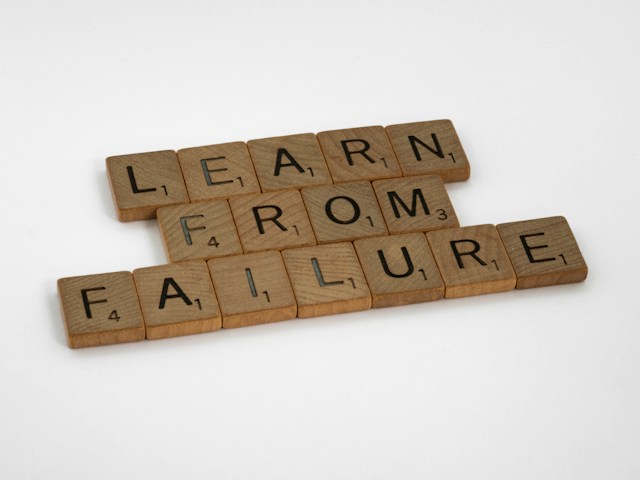
How are you making room for failure?

How do you make room for failure in your leadership practice?

Photo by Brett Jordan on Unsplash

How do you make room for failure in your leadership practice? When I was new to my career and leadership, I often painstakingly tried to avoid failure. I would spend enormous amounts of time thinking, planning, creating structures, and backup plans just in case something went wrong. When something inevitably went wrong, I blamed myself and tried to prepare even more! I soon realized that this process was not effective. I was not growing and learning about myself as a leader with this method. I needed to try something different.

Try not to control everything.

Try not to control everything, especially the things that are not in your control. I try to spend time thinking about what parts of each situation are actually within my control, not in my control or maybe within my field of influence.

Humility is Strong Leadership

Humility is an essential aspect of being a strong leader. Louise Penny creates the ultimate example of a leader who expresses humility in her Three Pines series, Inspector Gamache. Recently, I have been thoroughly enjoying the Inspector Gamache series by Louise Penny. Gamache is often described as positioning himself as a mentor to young folks in his field and teaching them how to be leaders. He is noted for teaching his mentees to say the following at crucial moments in their careers.

I don’t know.

I need help.

I’m sorry.

I was wrong.

-Inspector Armand Gamache

I don’t know.

In my leadership journey, it took me a long time to realize that saying, “I don’t know.” showed great strength. People actually appreciated my honesty in admitting I needed time and space to consult and research before getting back to them. As an educator, I used to draw a small circle on the board to indicate ‘what I know’ and then a much larger circle around it to indicate ’what I don’t know’.

My Path to Citizenship

“In this country, all of us are free. That Freedom Is founded on the principle that this nation is a country of laws, not of men.”-Judge Schwartz

Photo by Chalo Gallardo on Unsplash

Recently, a dear high school friend of mine shared a note from her father that spurred a strong memory for me, the memory of my path to citizenship. 

Each of us, except for a tiny few, came to this country from other lands. We are here because our fathers and mothers, grandfathers and grandmothers, our forebears, journeyed here in search of a better life for themselves and their children; to find a land where they and their families would be free.

-Judge Schwartz

In 1994, I had the opportunity and privilege of becoming a citizen of the United States. My family came here in the early 70’s from Sri Lanka shortly after the 1965 Immigration Act, the Hart-Celler Act.

Practice Stillness

What’s your stillness practice?

Photo by Nick Fewings on Unsplash

During this time of year, possibly packed with family events, time with friends, and work colleagues, travel and so much more it can be hard to find a moment to be still.  Do you have a stillness practice that works for you during this busy holiday and new year?

Being still can look different ways. I joined a meditation group a few years ago and we practice together in a community led by a beloved and skilled teacher most weekday mornings. I also enjoy a quick quiet moment first thing in the morning in bed, a time for gratitude and a big stretch to start the day. This lasts just a minute or two. I also enjoy the quiet time before sleep, reading a book, reflecting on the day. Some of my ‘stillness’ practices require movement, a type of mindful movement that allows me to connect with my body or nature.

Sitting at the Water Hole

Photo by ActionVance on Unsplash

I sit at the water hole and let my thoughts come to me.

Sometimes, I feel like my thoughts are chasing me and they keep finding me. Gayathri Narayanan, my meditation teacher, encouraged us to ‘sit at the water hole’ and wait for our thoughts to come to us. She said that her teacher, Gil Fronsdal, talked about it in terms of being a wildlife photographer. You could either follow the footprints and chase the wildlife around their territory or you could simply sit at the water hole knowing all animals will eventually need to drink. The first helpful step for me is to stop chasing my thoughts and stop letting them chase me. I sit at the water hole and let them come to me.

As my thoughts come to me, I label them. Is it useful? Is it pleasant? Unpleasant? Neutral? These questions have been helpful to me as I navigate times in my life that consume my thoughts.

Balancing is a Series of Falls

What would it look like to view falling as a part of balancing, mistakes as a part of learning and growing, and a necessary means to an end?

Photo by Caique Nascimento on Unsplash

Balancing is a series of falls. My yoga teacher said something about how balancing is just the process of falling in and out over and over again. While I wobbled slowly in tree pose, I had a light bulb moment. Balancing is just a series of falling in and out. Someone rarely balances right into a tree pose. You need to ground yourself, ready your limbs, fall in and out of balance, practice a lot, and reflect

When I taught at an independent school in Marin County California, there was a class called Energy Time, a sort of combo of meditation and Aikido. At that time, an experienced and skilled teacher taught us to fall and get back up.