Tag: leadership

Get Out of Your Own Way

I learned to get out of my own way from my daughter. At age 17, she started her own company, Celia Swimwear.

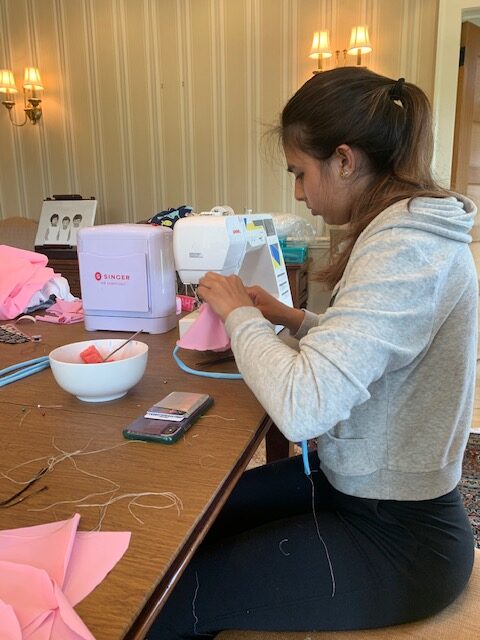
My husband and I didn’t even know she had done this until she needed our, over 18 adults, help to establish her LLC and open bank accounts. She has always been a visual artist and a seamstress since she was little. She designed her own swimsuits and tried sewing them. She realized that sewing swimsuits were difficult, the material, the stitching, etc. That did not stop her. She found a manufacturer who would produce her designs and who shared her values. She set up an online shop and got to work. Her sales were not taking off on her first line. That did not stop her. She learned about advertising on social media. She was hit with a large and unexpected customs bill. That was a big one!

Start Small to Make Big Change

In the last few years, my son has become an avid climber. He loves to scale the indoor climbing walls as well as make his way up to some actual mountains. Of course, I found this terrifying as his mother. One look at the heights and steep climbs and I was scared. He took me once to an indoor climbing gym and I watched as he took one small part of the wall at a time, sometimes trying the same foothold and spot multiple times. I found this to be an intriguing and valuable lesson. One mistake I often make in my life is that when I want to make a change, I start with a BIG idea or vision and leap in with lots of energy trying to get directly to my end goal. As I watched my son practicing securing each foothold, I realized that he was teaching me something important.

Balancing Effort and Ease

Balancing effort and ease is one of the paradoxes in leadership and in life. I first heard this phrase in yoga class. Recently, I have developed a yoga routine that has been helpful for me not only in terms of my body but also my mind and spirit. I often feel that the things I learn from my yoga teachers are applicable to life and leadership. This lesson of balancing effort and ease is one of many I am currently learning. 

Balancing effort and ease is one of the phrases that the teachers often mention when holding a difficult position or trying a new pose. As my teacher explained, the challenge should be enough to be interesting and require a certain amount of effort and still, you should be able to breathe and have an awareness of what is happening. When we find the middle path, we find success.

How can you have both effort and ease?

Self Care is Not Selfish

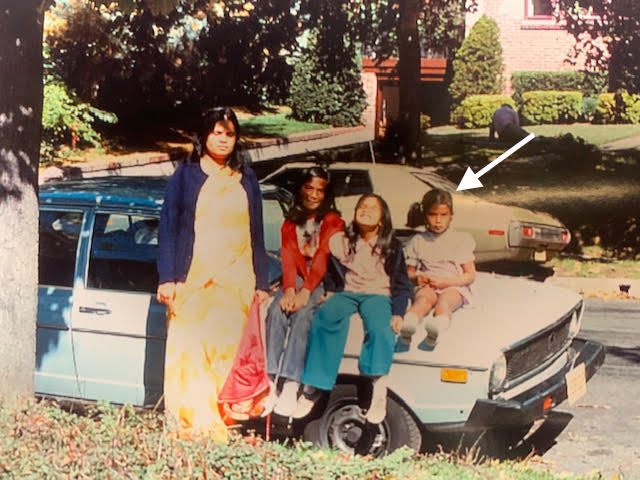
Self-care is not selfish. Growing up I learned a different message. As a child in an immigrant family, I was raised watching parents who worked tirelessly for the good of others, building and supporting our small but growing Sri Lankan community in New Jersey. My parents did not take time for haircuts, manicures, exercise, or even an indulgent moment with a hot cup of tea and a good movie was rare. When I was a young mom and teaching full time, the last thing I spent time and resources on was self-care. I hustled to do my best at my job and take care of my family. I did indulge in the occasional haircut, soaking in every moment of the luxurious hair wash and scalp massage. Although when I returned home, I worked extra hard to cook, clean, and spend time with my kids. I almost felt guilty for getting a haircut, for taking care of myself, and for having time alone.

Intention or Intuition?

Which is more helpful when making decisions, using your intuition, or grounding yourself in your intention? Let’s define intuition as your ‘gut’ feelings, which are usually based on your past experiences and personal values. Let’s define intention as your grounded purpose or mission. I believe intention can also have its roots in what you value. Which strategy do you use when making decisions, intuition or intention? Do you lean on your experiences and your gut feelings when making a decision? Do you ground yourself in your original purpose and mission when making a critical decision? For example, when it comes to hiring in schools, we often decide to go with our ‘gut‘ feelings about a candidate: intuition. Yet, when we take the time to have an intentional process that honors the mission and values of the school and takes into account possible biases, and includes multiple voices, we may find ourselves with the right candidate for the position. 

How Deep is Your Bench?

How deep is your bench? 

I am usually the last person to use a sports metaphor but it actually works well here. To have a deep bench means to have a significant number of effective people on your team. This is something you should evaluate intentionally and periodically. 

Having a strong team ensures better collaboration, decision-making, problem-solving, and ultimately better results. When you don’t have a strong team, you may find yourself trying to put out fires that others should be handling, not using your time effectively. 

First, evaluate your bench, your team.

These are some possible indicators that your bench needs some strengthening, 

  • Are you taking on too many tasks yourself?
  • Do you find your team members need your input on every decision they make?
  • Are you attending lots of meetings that you may not need to attend?
  • Do you have to be always present for efficient and effective work to be accomplished?

Modeling Leadership Style

What kind of leadership style are you modeling in your family? 

I grew up in a first-generation immigrant family. My father worked 6 days a week as a physician at a hospital, a clinic, and also running his own practice. He left early in the morning and returned late at night. The only day he was home was Sunday. On Sundays, he worked too but on home-related things: mowing the lawn, weeding the garden, changing the oil in the car. He was a hard worker who was dedicated to his profession and to his patients and was determined to create a certain life in a new country for his family. What did I learn from watching him? I learned to work hard all the time. I learned that you can achieve what you set out to with determination. I learned that it was important to do things yourself. I also learned difficult things, some of which I have had to unlearn.

Develop a Sense of Belonging

How can you develop a sense of belonging this year? As you prepare for students, families, faculty, and staff to return to campus, there is much to think about: maintaining health and safety, preparing facilities, gathering supplies, and so much more. When you welcome your community back to campus, remember an important part of your preparation: How will you develop a sense of belonging? 

Belonging, One of Our Basic Needs:

According to psychiatrist William Glasser, Belonging is one of our basic needs. He defines love and belonging as one of our essential psychological needs for seeking relationships, making connections, giving and receiving affection and feeling part of a group. Sebene Selassie, mindfulness expert and author of You Belong, describes belonging as coming from within a person and states that difference does not mean ‘not belonging.’ Selassie writes, “Difference” does not equal “not belonging,” but as many of us live farther away from our families and as we connect to multiple communities and cultures, our sense of belonging feels tenuous.”

Traditions

Traditions usually uphold our history and are connected to strong memories. They help us remember people, places, and events and have the opportunity to give us a sense of belonging and community. Traditions are familiar and can bring comfort, pointing to the passing of time. 

In schools, we have many traditions at this time of year: moving up ceremonies, graduations, retirements, and more. We celebrate the successes of our students, faculty, and staff while engaging in traditions and rituals to show the passing of time. This is yet another time of transition.

Should traditions change as our communities change? Many of our schools don’t look the way they did at their founding. This is a good thing. Change is essential. Sometimes there are opportunities to bring new life to long-standing traditions in a way that honors the past as well as acknowledges the present. How do we do this? We begin with reflection as these are big decisions.

Hope is a Plan!

Conventional wisdom says that hope is not a plan. I disagree. Hope is most definitely a plan. Cultivating hope is a skill that we need to practice and develop, and hope is especially needed when facing hardship. This is a time globally, locally, and in our workplaces of crisis. Hope has agency and purpose. It encourages a perspective that can help us see possibilities and choices. Hope, as a skill modeled by leadership, can lead to increased engagement and better health.

Look at the data and imagine an outcome. The data holds us in realism and the imagining helps us think broadly and deeply about ‘what if’. You have to see some evidence in your world to imagine the possibility. Dr. Jacqueline Mattis, a clinical psychologist from Rutgers University, encourages us to ‘read the room’ and read the past, putting the pieces together to make reasonable expectations in her conversation with Dan Harris on Ten Percent Happier.