News

What Do You Do With A Problem?

Kobi Yamada writes of a brilliant idea in his book, What Do You Do With A Problem?

Photo by Diego PH on Unsplash

Yamada shows us how to view a problem as an opportunity. His main character is a child with a problem that keeps growing as he keeps worrying about it and even ignoring it. Until he decides to take a different approach. Yamada writes: 

When I got face-to-face with it (the problem), I discovered something. My problem wasn’t what I thought it was. I discovered it had something beautiful inside. My problem held an opportunity! It was an opportunity to learn and grow. To be brave. To do something.

Kobi Yamada

When I am faced with a complex problem, I think about it constantly. The issue will fill my every thought in waking hours and I may even dream about it. This type of rumination can feel like it’s overtaking my mind.


Building Trust

How are you building trust in your community as a leader?

Photo by Rob Wicks on Unsplash

Building trust is an intentional practice. Building trust is an essential practice of an effective leader. You need to create a plan to accomplish this ongoing task of building, earning, and gaining trust with individuals and with groups in your community. It’s never too late to start!

Consider some of these actionable items:

  • Meet one on one with all your direct reports. This can be an annual goal meeting or it can be a non-agenda meetup that is time for your direct report to share who they are. Everyone should get the same opportunity in your team. 
  • Follow through when you say you will. If you say you will do something, do it. This is a huge trust builder. Alternatively, if you say you will do something and you don’t, it is a huge trust breaker. 

Stress: Why Do You Care?

Photo by Matthew Henry on Unsplash

Are you experiencing stress? Why should you care? It may mean that something or someone you care about is involved. According to Dan Harris in the Ten Percent Happier Stress Better Meditation Challenge Series, stress can be a signal that something matters to you. Professor Modupe Akinola of Columbia University suggests that when you realize you are stressed try to find out why you care. She calls this a ‘reappraisal’ of the stress and states that one way to NOT feel as much stress is to figure out the underlying reason why you care. Rather than focusing on the cause of the stress, focus on why you care about what’s causing the stress.

Here are some steps they suggest from the Ten Percent Happier Stress Better Challenge:

  • Tune in to your feeling of stress: Know when your body feels stressed, be aware of when it is happening, and notice. 

Summer Regrets

Photo by Marcos Paulo Prado on Unsplash

Do you have summer regrets? Now that summer is coming to a close, do you have regrets about the things you didn’t do for yourself, with your family, or for work? Many of us go into summer with big plans of family time, road trips, books to read, and tasks to accomplish around the home. As summer comes to a close, I am realizing that I did not hang all those pictures, get that hole in my jacket repaired, or start writing in that gratitude journal. Should those items now become regrets? Or should I reflect and reshape them to become goals for right now? Who said that just because summer is over on the calendar we can’t still work towards our aspirations? According to Daniel Pink in his book The Power of Regret, the feeling of regret can be used in effective and powerful ways. 

Are You Strong Enough to Ask for Help?

Recently, I was reminded that asking for help shows strength. We just got a new puppy! It was a spontaneous decision.

We already have a three-year-old dog and we were about to move across the country in two weeks. Now 9 weeks in, I can barely make it down the street with both dogs. There is a lot of ankle biting, barking, and general chaos on the sidewalk. I am not sure our new neighbors are eager to meet our family. So after much thought, we decided to engage the support of an expert trainer and walker as well as sign up for puppy kindergarten classes. Now, we are taking a few steps forward each day. Of course, there are plenty of ankle-biting moments still today and in our near future. Just this morning, I was exhausted after walking a few blocks. 

At first, I thought outsourcing and paying for help was a sign that I couldn’t do something I should be able to do myself.

Don’t Rush to the Solution

Don’t rush to the solution. That’s what I keep telling myself when I realize I am in the weeds of an issue.

Photo by Brett Jordan on Unsplash

Recently, I dove into solving what I thought was the problem, only to realize later that I had buried myself into the minutiae of details and was ultimately not making the change that was necessary. I had to stop, pull back, and look at the issue from the 30-foot view to define the actual problem. As Albert Einstein once stated: “If I had an hour to solve a problem I’d spend 55 minutes thinking about the problem and 5 minutes thinking about solutions.”

As a leader, it is vital to keep the long view and the broad view of the systems at play. When leaders take time to reflect, think, and listen, they are more likely to come to a collective decision that can affect lasting and true change.

Exit Interviews

Gathering data from your exiting employees is crucial. Photo by Andrew Teoh on Unsplash

Exit interviews are vital to the growth of your institution and an important part of saying goodbye. Are you doing them? Are you doing them well? Exit interviews are one on one meetings conducted when an employee moves on from your institution. When done well, they are great sources of data. 

Some places may have an HR member discuss benefits with an exiting employee and call that an exit interview. In other places, just let that employee walk away and gather no data at all about their experience. Don’t let this opportunity for growth pass you by. Stop and think about what you can learn from this individual and their experience no matter what reason or what conditions they are leaving under. Another invaluable benefit of conducting exit interviews is that you are providing the exiting employee the opportunity to vent in a safe and productive manner. 

Saying Goodbye

It’s that time of year again in schools, a time for saying goodbye.

Photo by Ioana Cristiana on Unsplash

May and June are filled with transitions: graduations, retirements, faculty and staff movement, and more. The way a community manages transitions matters and reflects upon that community’s mission, vision, and values. How do you say goodbye and why is it important?

“The way we gather matters.” states Priya Parker, the author of The Art of Gathering, How We Meet and Why It Matters. She defines gathering as “the conscious bringing together of people for a reason.” Priya Parker goes on to say that when we gather together, we “exchange information, inspire one another, test out new ways of being together” to name a few outcomes. Nonetheless, we spend very little time intentionally planning and thinking about the ways we gather. 

Gathering to say goodbye is the bringing together of people to honor a person or people as they move on.

Leading with Equanimity

Leading with equanimity can lead to a spacious mind. A February morning in New Jersey.

Do you lead with equanimity? What does equanimity mean to you? When I first heard the phrase ‘lead with equanimity’, I would imagine someone who was standing still in the middle of chaos, someone who did not waver or show emotion, someone who did not react and was ultimately possibly ineffective. To me, this is no longer a true or complete version of leading with equanimity. 

My Early Thoughts

When I first started my journey into leadership, I found that I became easily tightly attached to an idea or plan. I had thought long and hard about how the plan was going to work and stuck to it. Sometimes, I was so attached to the plan or idea that I could not see some pitfalls, unintended consequences, alternative ways to proceed, or necessary course changes. Other times, I found myself so averse to an idea or plan that I could not possibly see a way for it to work.

One Set of Values is all You Need

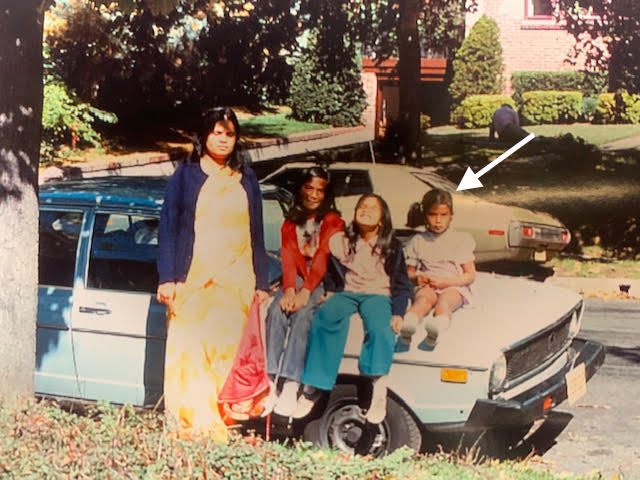
I had to code-switch as a kid living in a Sri Lankan immigrant household and then going to a suburban predominantly white school in New Jersey.

On a daily basis, I switched who I was depending on where I was.

Do you have one set of values for how you show up at work and another for at home? Ideally, you should be able to be the same person at work as you are at home, with some small changes (maybe no pajamas at work). For some, this is a privilege that we do not even notice and for others, it may feel like a luxury. In fact, we all should be able to show up with one set of values that is true for us in both settings. 

The Importance of Values

When I begin coaching a new client, we often work through a values exercise. We use a list of values and narrow our way through to the few values that are most meaningful for the client.